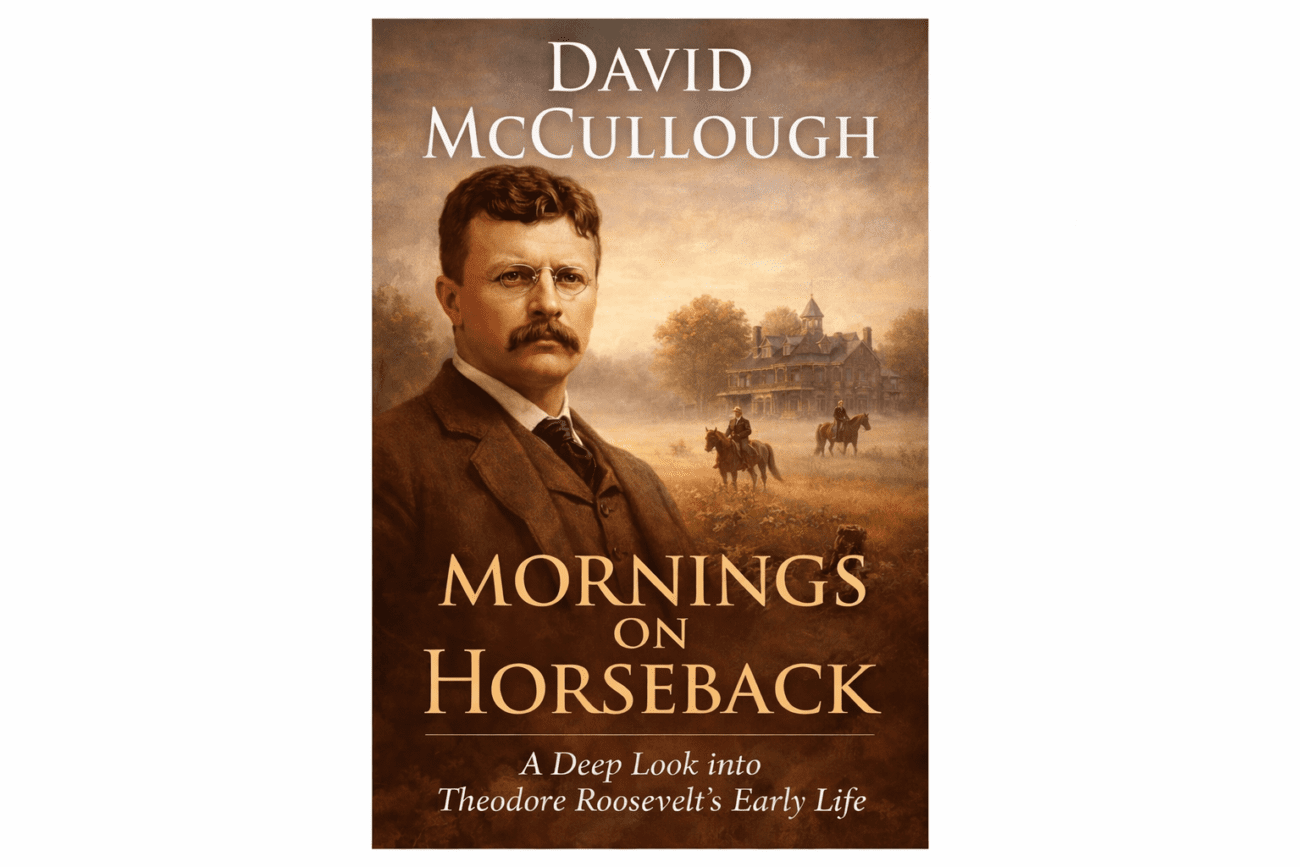
Mornings on Horseback is a powerful biographical work that explores the childhood and formative years of one of America’s most dynamic leaders, Theodore Roosevelt. Written by acclaimed historian David McCullough, this book does not simply recount events — it paints a vivid portrait of how illness, family influence, education, and personal struggle shaped the future U.S. president.
For readers interested in leadership, history, or inspiring life stories, Mornings on Horseback stands as a timeless classic that reveals how greatness often grows from adversity.
About Mornings on Horseback Book
Mornings on Horseback book focuses on Theodore Roosevelt’s life before he entered politics. Instead of concentrating on his presidency, the narrative dives into his childhood in New York City, his struggles with severe asthma, and the extraordinary family environment that molded his personality.
David McCullough presents Roosevelt not as a legend, but as a fragile, determined child who transformed himself through discipline and courage. This approach makes the biography both human and inspirational.
Why the Title “Mornings on Horseback”?
The title refers to Roosevelt’s practice of riding horses early in the morning to strengthen his weak body. His father encouraged physical training to overcome asthma and frailty. These morning rides symbolized his lifelong habit of pushing beyond limits — physically, mentally, and emotionally.
David McCullough’s Writing Style
David McCullough Mornings on Horseback reflects the author’s signature storytelling style — rich detail, emotional depth, and historical accuracy blended seamlessly.
Narrative Excellence
McCullough writes like a novelist while maintaining strict historical integrity. He uses personal letters, diaries, and historical records to reconstruct conversations and settings. The reader feels transported into Roosevelt’s home, travels, and family discussions.
Humanizing History
Instead of presenting Theodore Roosevelt as just a historical figure, McCullough portrays him as:
-
A sickly child struggling to breathe
-
A curious student fascinated by nature
-
A son deeply devoted to his parents
-
A young man driven to prove himself
This emotional connection makes the book compelling for both history lovers and casual readers.
Theodore Roosevelt’s Early Challenges
One of the strongest themes in Mornings on Horseback is overcoming weakness.
Battling Severe Asthma
Roosevelt suffered from life-threatening asthma attacks. During the 19th century, medical treatment was limited. His parents often stayed awake at night, fearing he might not survive. Instead of surrendering to illness, Roosevelt followed his father’s advice:
“Build the body.”
He began boxing, hiking, swimming, and riding — slowly transforming into a physically strong young man.
Family Influence
Roosevelt’s father, Theodore Roosevelt Sr., played a critical role. He believed in discipline, charity, and moral responsibility. His mother, Martha “Mittie” Roosevelt, added warmth and Southern charm to the household.
The family environment emphasized:
-
Education
-
Travel
-
Intellectual curiosity
-
Compassion
These influences shaped Roosevelt’s later leadership style.
Education and Intellectual Growth
Roosevelt was homeschooled due to health issues but developed a passion for reading and science. He kept notebooks about animals, insects, and birds, showing early signs of becoming a naturalist.
Later, he attended Harvard University, where his intellectual confidence grew. McCullough shows how Roosevelt balanced academic interests with physical self-improvement, proving his belief in a “strenuous life.”
Major Themes in Mornings on Horseback
1. Self-Transformation
The book highlights Roosevelt’s journey from weakness to strength. His life demonstrates that personal effort can overcome physical limitations.
2. Family Values
Roosevelt’s character was shaped by strong moral guidance, love, and expectations from his parents.
3. Curiosity and Learning
His passion for knowledge, nature, and history fueled his future achievements.
4. Emotional Depth
The biography reveals Roosevelt’s grief after losing loved ones, showing his emotional vulnerability.
Mornings on Horseback Book Review
Mornings on Horseback book review sections across literary circles often praise the book for its emotional richness and depth. Here’s an overview of its strengths:
Strengths
Deep psychological insight into Roosevelt
Engaging storytelling style
Well-researched historical detail
Inspirational message about resilience
Possible Limitations
Some readers expecting action-filled political drama may find the early-life focus slower. However, this depth is exactly what makes the biography unique and meaningful.
Who Should Read This Book?
This book is ideal for:
-
History enthusiasts
-
Leadership students
-
Biography lovers
-
Motivational readers
-
Students studying American history
It also suits those who want to understand how early life shapes leadership qualities.
Mornings on Horseback Audiobook Free – What to Know
Many readers search for “Mornings on Horseback audiobook free.” While free trial options may exist on audiobook platforms, the book is a copyrighted work. Legal versions are typically available through:
-
Audiobook subscription trials
-
Public library digital services
-
Educational platforms
Listening to the audiobook brings McCullough’s storytelling to life, making it a great option for commuters and audio learners.
Why This Biography Still Matters Today
Even decades after publication, Mornings on Horseback remains relevant because it speaks about:
-
Personal growth
-
Resilience
-
Parental influence
-
Character development
In a world focused on quick success, Roosevelt’s slow, disciplined self-improvement feels especially powerful.
Impact of the Book
The book helped reshape public understanding of Theodore Roosevelt. Instead of seeing only the energetic president, readers discover the sensitive, struggling boy who built himself step by step. It proves that leadership begins long before power or title.
Conclusion
Mornings on Horseback is more than a biography — it is a study of character formation. David McCullough masterfully shows how illness, family, education, and determination shaped Theodore Roosevelt into one of America’s most admired leaders.
For anyone seeking inspiration, historical depth, or a meaningful life story, this book is a must-read. It reminds us that greatness is not born — it is built, one disciplined morning at a time.
FAQs
1. What is Mornings on Horseback about?
It focuses on Theodore Roosevelt’s childhood, family life, health struggles, and early development before his political career.
2. Who wrote Mornings on Horseback?
The book was written by Pulitzer Prize–winning historian David McCullough.
3. Is this book about Roosevelt’s presidency?
No, it mainly explores his early life and personal growth rather than his time in office.
4. Why is the book considered inspiring?
It shows how Roosevelt overcame severe illness through determination and self-discipline.
5. Where can I find the audiobook version?
Audiobook versions are available on major platforms and sometimes through library services or free trial offers.
6. Is Mornings on Horseback suitable for students?
Yes, it’s excellent for students studying history, leadership, or biography.