Checking your car’s engine oil regularly is one of the most important maintenance habits every driver should learn. Engine oil keeps the engine lubricated, reduces friction between moving parts, and helps prevent overheating. If the oil level becomes too low or dirty, it can damage the engine and lead to expensive repairs. Understanding how to check oil properly ensures your car runs smoothly and efficiently for a long time. This guide explains everything you need to know about how to check engine oil, including tools, steps, and helpful tips for beginners.
Why Checking Engine Oil Is Important
Engine oil acts as the lifeblood of your vehicle’s engine. It lubricates internal components such as pistons, crankshafts, and valves so they can move smoothly without excessive friction. Without enough oil, these parts can overheat and wear out quickly. When you regularly check your oil level, you can detect problems early, such as oil leaks or oil burning inside the engine. Knowing how to check oil in car also helps ensure the oil is clean and at the correct level. Proper oil levels improve fuel efficiency, reduce engine wear, and extend the lifespan of your vehicle.
When Should You Check Your Car’s Oil
Many car experts recommend checking the engine oil at least once a month or before long road trips. It is also a good idea to check the oil if you notice warning signs like unusual engine noise, reduced performance, or the oil warning light appearing on the dashboard. Learning how to check oil level in car helps you identify these issues before they become serious mechanical problems. Drivers who frequently travel long distances or drive in extreme temperatures should check their oil more often.
Tools Needed to Check Oil Level
Checking oil is a simple process and usually requires very few tools. Most vehicles already have everything you need built into the engine bay. The most important tool is the oil dipstick, which is used to measure the oil level. You may also need a clean cloth or paper towel to wipe the dipstick during the process. Some drivers also keep a flashlight to see the oil level markings clearly. Understanding how to check car oil is easy once you know where the dipstick is located and how to read it correctly.
Step-by-Step Guide: How to Check Oil in Your Car
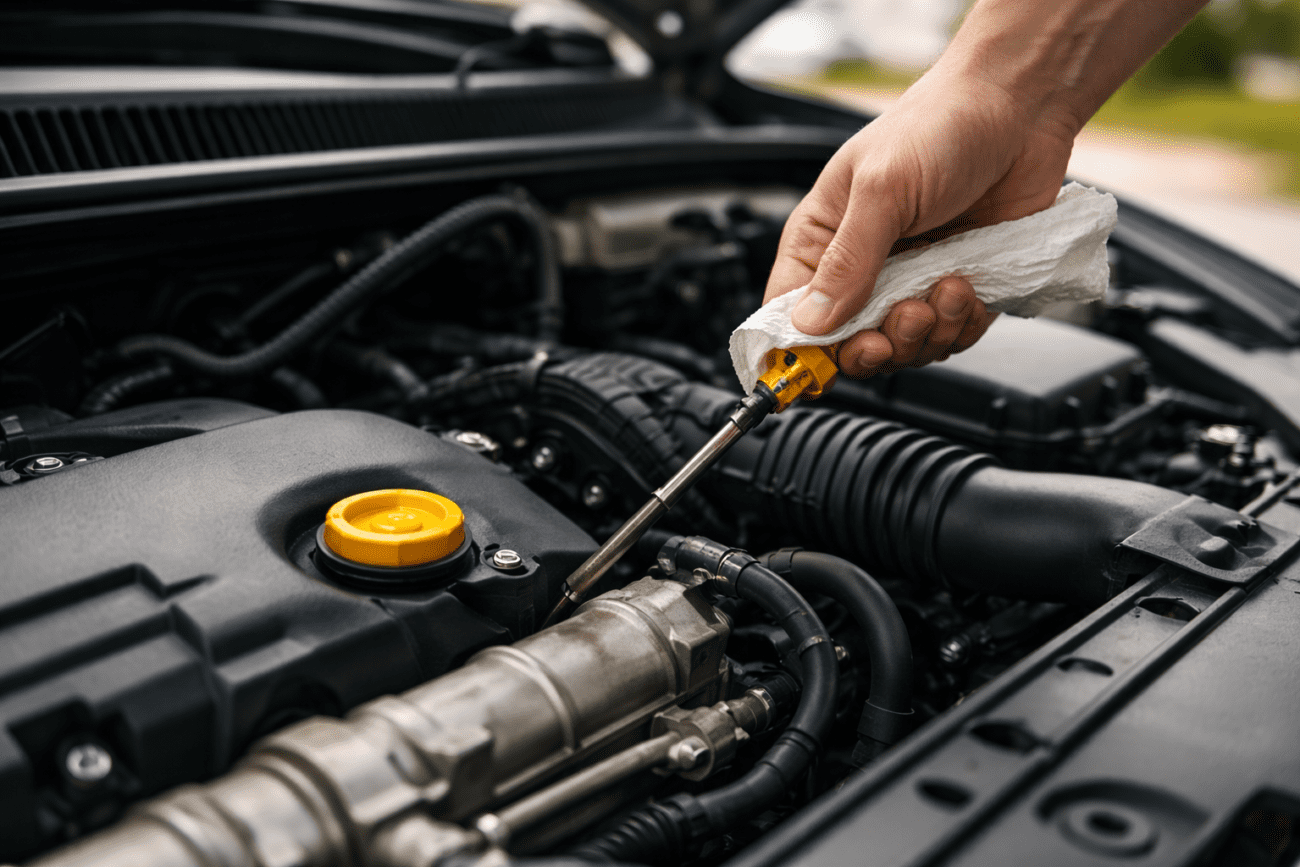
Before starting, make sure your car is parked on a flat surface and the engine is turned off. Allow the engine to cool for about 5–10 minutes so the oil can settle in the oil pan. First, open the hood of the car and locate the engine oil dipstick, which usually has a yellow or orange handle. Pull the dipstick out slowly and wipe it clean with a cloth or paper towel. Insert the dipstick back fully into the tube and then pull it out again to check the oil level. The dipstick will have markings that show the minimum and maximum oil levels. If the oil level is between these marks, your oil level is safe. This simple process explains how to check oil level quickly and accurately.
How to Read the Oil Dipstick Correctly
Reading the dipstick properly is an important step when learning how to check oil level in car. Most dipsticks have two marks labeled “MIN” and “MAX” or sometimes dots or lines indicating the acceptable oil range. The oil should always be between these two marks. If the oil level is near the minimum mark, it means your engine needs additional oil. If it is above the maximum mark, there may be too much oil in the engine, which can also cause problems. The oil should appear smooth and slightly transparent, usually amber or light brown in color.
Checking the Condition of Engine Oil
Besides checking the oil level, it is also important to check the condition of the oil. When learning how to check engine oil, you should look at the color and texture of the oil on the dipstick. Fresh oil is usually light brown or amber, while older oil becomes darker as it collects dirt and debris from the engine. If the oil looks very dark, gritty, or thick, it may be time for an oil change. If you notice a milky color, it could indicate coolant contamination, which may require professional inspection.
What to Do If Oil Level Is Low
If you find that the oil level is below the recommended range, you should add engine oil immediately. First, check your car owner’s manual to identify the correct oil type and viscosity for your vehicle. Locate the oil filler cap on top of the engine and remove it carefully. Pour the oil slowly using a funnel to avoid spills. After adding a small amount of oil, wait a few minutes and check the dipstick again to ensure the level is correct. This step is essential when practicing how to check oil in car because overfilling can be just as harmful as running low on oil.
Common Mistakes When Checking Car Oil
Many drivers make simple mistakes when checking their engine oil. One common mistake is checking the oil immediately after turning off the engine. The oil needs time to settle in the oil pan before an accurate reading can be taken. Another mistake is not wiping the dipstick before checking the oil level. This can lead to incorrect readings. Some drivers also check the oil on uneven surfaces, which affects accuracy. Understanding how to check car oil properly helps avoid these mistakes and ensures reliable results.
Signs Your Car May Have Oil Problems
Certain warning signs may indicate issues with your engine oil. If you notice smoke coming from the exhaust, unusual engine noises, or the oil warning light on your dashboard, these may be signs of low or dirty oil. Another common sign is a burning smell coming from the engine area. Drivers who understand how to check oil level can quickly confirm whether these problems are related to engine oil. Regular oil checks help prevent severe engine damage and costly repairs.
How Often Should You Change Engine Oil
While checking oil is important, changing the oil regularly is equally essential. Most modern vehicles require an oil change every 5,000 to 10,000 kilometers depending on the type of oil used and driving conditions. Synthetic oils usually last longer than conventional oils. Drivers who regularly monitor how to check oil level in car can also determine when oil changes are necessary based on oil condition and level. Following the manufacturer’s recommended schedule helps keep the engine running efficiently.
Benefits of Regular Oil Checks
Drivers who routinely check their engine oil enjoy several benefits. Regular oil checks help prevent engine overheating, improve fuel efficiency, and extend engine life. It also allows you to detect leaks or engine problems early before they become expensive repairs. Learning how to check engine oil is one of the easiest ways to maintain your vehicle and ensure reliable performance for many years. A few minutes of checking oil each month can save thousands in potential repair costs.
Conclusion
Understanding how to check oil is a simple but essential skill every car owner should learn. Regular oil checks ensure the engine remains properly lubricated and protected from excessive wear. By following the correct steps—parking on a level surface, using the dipstick properly, and checking oil condition—you can keep your vehicle running smoothly. Whether you are a new driver or an experienced car owner, mastering how to check oil in car helps improve vehicle reliability, safety, and long-term performance.
Frequently Asked Questions (FAQs)
How often should I check my car’s engine oil?
It is recommended to check your engine oil at least once a month and before long trips. Regular checks help ensure the oil level remains within the safe range.
Can I check engine oil while the engine is hot?
It is better to wait a few minutes after turning off the engine so the oil can settle in the oil pan. This ensures a more accurate reading.
What happens if my engine oil is too low?
Low oil levels can cause increased friction between engine parts, leading to overheating, poor performance, and potential engine damage.
What color should engine oil be?
Fresh engine oil is usually amber or light brown. Dark or thick oil may indicate that it needs to be replaced.
Can too much oil damage an engine?
Yes, overfilling the engine with oil can cause pressure buildup and damage engine seals or components, so it is important to maintain the correct oil level.