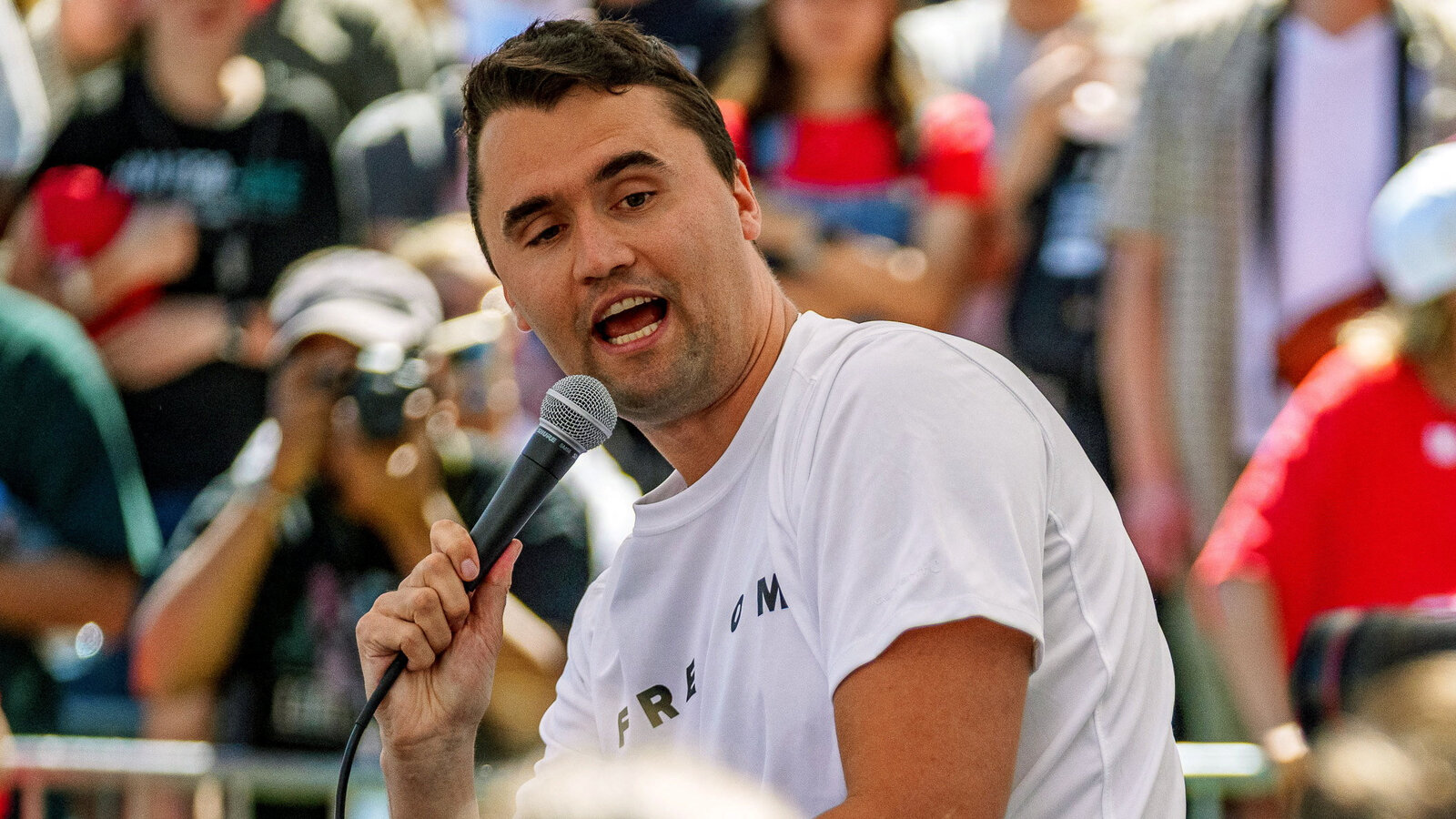
In September 2025, the shocking news of Charlie Kirk being shot during a campus event sent waves across political and social media circles.
Charlie Kirk, the founder of Turning Point USA (TPUSA), was critically injured in what authorities initially called a “lone shooter” incident. Tyler Robinson, a 22-year-old suspect, was quickly apprehended and charged. While official statements portrayed the attack as a simple case of an individual acting alone, political commentator Candace Owens has publicly challenged this narrative, suggesting that multiple parties may have been involved.
Owens’ Concerns: Why She Questions the Official Story
Candace Owens, a long-time ally of Kirk and a prominent conservative commentator, has raised doubts about the simplicity of the official account. She argues that the available evidence does not conclusively prove that Tyler Robinson acted alone. Her concerns focus on three main areas: video footage, forensic evidence, and event logistics.
Limited and Ambiguous Video Evidence
Owens highlights the limited surveillance footage available from the scene. Only a brief clip has been released to the public, showing an unidentified individual fleeing immediately after the shooting. Owens points out that this clip is inconclusive and does not definitively identify Robinson as the sole shooter. According to her, “The public is not seeing the full sequence of events, and what is presented could be misleading.” She believes that missing footage could contain critical evidence that may suggest the involvement of additional actors.
Fingerprints and Forensic Ambiguities
One of Owens’ most significant claims relates to the firearm used in the shooting. Tyler Robinson’s fingerprints were reportedly found on the weapon, but Owens has claimed that they were not the only fingerprints present. She suggests that ignoring other prints could be a deliberate omission or oversight, potentially shielding other individuals who may have been involved. In her view, Robinson may have been used as a “patsy” to divert attention from the actual orchestrators behind the attack.
Questionable Role of Lance Twiggs
Owens has also mentioned Lance Twiggs, an individual she believes may have played a role in the event. While Twiggs is not alleged to have pulled the trigger, Owens suggests that available evidence, including clothing analysis and positioning at the scene, points toward his possible involvement. She contends that understanding Twiggs’ role is essential to fully unravel the incident, implying that multiple people coordinated aspects of the attack.
Event Logistics: A Missed Opportunity for Safety
Another point Owens has emphasized is the event’s location and organizational decisions. TPUSA had initially been advised to hold the event indoors to control entry, monitor attendees, and ensure security camera coverage. However, the organization opted to host the event in a more open, public space. Owens criticizes this decision, claiming it significantly increased the risk of an attack and facilitated potential access for multiple assailants. She frames this not as mere negligence but as an element that complicates the official “one shooter” narrative.
Building the Case for a Larger Conspiracy
Owens’ analysis is grounded in her belief that the evidence, when viewed collectively, points to a more complex scenario than initially presented. Some of her key observations include:
-
Discrepancies in Surveillance Footage: The released videos do not provide continuous coverage of the event, leaving gaps during critical moments.
-
Multiple Fingerprints on the Weapon: If verified, this could indicate the presence of others in direct contact with the firearm before the incident.
-
Potential Co-Conspirators: Individuals such as Lance Twiggs might have had roles ranging from planning to distraction or logistical coordination.
Owens suggests that these factors, taken together, make it plausible that the attack was part of a coordinated effort rather than the act of a single individual.
Public Reactions and Controversy
Owens’ statements have generated considerable debate. Supporters praise her for questioning the mainstream narrative and urging a deeper investigation, emphasizing transparency and accountability. Critics argue that her claims could spread misinformation, especially in the absence of official corroboration for multiple assailants. Social media platforms and news outlets have seen heated exchanges, with some commentators supporting Owens’ skepticism while others urge caution before drawing conclusions.
Legal analysts note that while public commentary is protected free speech, any formal challenge to the investigation would require evidence admissible in court. They emphasize that claims about additional perpetrators need careful verification before influencing official proceedings.
Implications for Turning Point USA and Political Discourse
Beyond the investigation, Owens’ comments have broader implications for TPUSA and political discourse in the U.S. The controversy highlights how high-profile political figures and organizations can become targets of violence, and how public narratives around such events can shape political messaging.
For TPUSA, this incident and the surrounding debate underscore the importance of security protocols and crisis communication. Owens’ critique points to the potential consequences of decisions made about event logistics and the public dissemination of information.
The Need for Transparent Investigations
Owens has repeatedly called for transparency in the ongoing investigation. She urges authorities to release all relevant evidence, including complete surveillance footage, forensic reports, and witness statements. According to Owens, only a fully transparent investigation can prevent speculation and ensure accountability for all parties involved.
She also emphasizes the importance of independent oversight. While law enforcement agencies handle the official investigation, Owens and others have argued that independent analysts or third-party experts should review the case to identify gaps or overlooked evidence.
Conclusion
Candace Owens’ questioning of the Charlie Kirk shooting narrative has ignited a national conversation about the complexity of high-profile violent incidents. By highlighting potential gaps in video evidence, forensic inconsistencies, and the possible involvement of multiple individuals, Owens challenges the simplistic view of the shooting as a lone attacker scenario.
Whether her claims are ultimately validated by further investigation or not, they underscore the critical importance of transparency, rigorous analysis, and public scrutiny in understanding events that have profound political and social ramifications. The unfolding developments in the Charlie Kirk case continue to be closely monitored by both supporters and skeptics alike, reflecting the broader tensions in contemporary political discourse.